Louisiana’s offshore energy industry is one of the most productive in the world, and one of the most dangerous. Workers who spend their days on drilling platforms, supply vessels, and production facilities in the Gulf of Mexico face hazards that most people never encounter in a lifetime of work. Understanding why offshore workers face higher injury risks, and what legal protections exist, can make a real difference when something goes wrong.
What Makes Offshore Work So Dangerous?
Offshore workers face compounding hazards: remote locations, heavy machinery, extreme weather, and legal complexity that onshore workers don’t encounter.
Offshore work is inherently high-risk. Workers operate far from shore, often in difficult weather conditions, on equipment that demands constant physical effort and precision. A single misstep can result in catastrophic injury. Several overlapping factors drive injury rates higher in this industry than in almost any other.
Physical environment and isolation. Platforms and vessels operate miles offshore, where emergency medical care is not minutes away. When a serious injury occurs, evacuation can be delayed by weather, distance, or equipment failures. That gap between injury and medical treatment can turn a serious wound into a life-altering one.
Heavy machinery and equipment. Drilling rigs, cranes, pipelines, and pressurized systems operate continuously. Equipment malfunctions, improper maintenance, and mechanical failure are leading causes of offshore injuries. BSEE investigates offshore incidents and identifies both human-performance factors and equipment or design failures as contributing causes; the relative importance of these factors varies by incident and year.
Fatigue from long shift rotations. Most offshore workers follow a schedule of 12-hour shifts for two to four weeks straight before rotating home. Fatigue accumulates fast under these conditions, and tired workers make mistakes. OSHA warns that fatigue from long or irregular shifts increases the risk of workplace injuries, citing research linking 12-hour workdays with higher injury risk.
Exposure to hazardous substances. Workers on oil and gas platforms regularly encounter hydrogen sulfide, drilling mud chemicals, and other toxic substances. Inadequate ventilation, missing safety gear, or improper handling procedures can cause chemical burns, respiratory damage, or long-term illness.
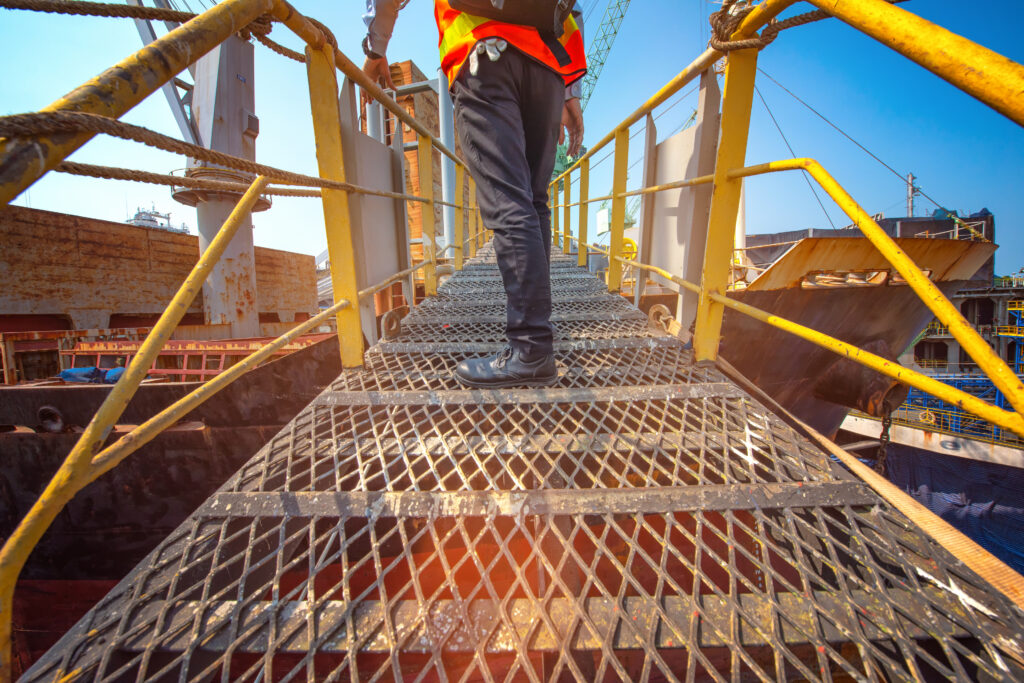
Slips, falls, and struck-by incidents. Wet decks, heavy tools, and constant motion create conditions that frequently lead to slips and falls. Being struck by falling equipment or caught between machinery is another leading category of injury offshore. These incidents cause fractures, traumatic brain injuries, and spinal damage.
Why Louisiana Workers Are Especially Vulnerable
Louisiana’s geography and concentration of offshore operations put more workers in harm’s way than almost any other state in the country.
Louisiana is home to extensive offshore oil and gas activity, and Port Fourchon services roughly 90% or more of deepwater Gulf of Mexico rigs and offshore activity, according to Louisiana and port officials. That concentration means a larger share of workers, more vessels, and more exposure to the risks described above.
Workers who commute through Baton Rouge and southern Louisiana parishes to reach crew boat docks and helicopter terminals make up a substantial portion of the offshore labor force. Many of these workers live and work under Louisiana law on the front end, then shift into federal maritime jurisdiction the moment they board a vessel or platform.
That jurisdictional shift is one of the most legally complicated aspects of offshore injury cases. Depending on where an injury occurs, what type of vessel or platform is involved, and the worker’s specific job duties and employment relationship, a worker’s claim may fall under the Jones Act, the Longshore and Harbor Workers’ Compensation Act (LHWCA), the Outer Continental Shelf Lands Act (OCSLA), or general maritime law. Each framework has different rules, different deadlines, and different remedies.
Getting that determination wrong can cost an injured worker their right to compensation entirely.
Common Injuries Offshore Workers Suffer
The injuries that result from these hazards are rarely minor. Commonly reported categories of serious offshore injuries include:
- Traumatic brain injuries from falls or struck-by accidents
- Spinal cord injuries and disc damage
- Burns from fires, explosions, or chemical exposure
- Crush injuries from equipment and machinery.
- Respiratory conditions from toxic chemical exposure
- Broken bones requiring surgery and extended rehabilitation
Some of these injuries are permanent. When they are, the financial impact on a worker and their family can be severe, covering lost income, long-term medical care, and reduced quality of life.
What Legal Protections Apply to Offshore Workers?
Federal laws, including the Jones Act and the LHWCA, give offshore workers stronger legal tools than standard workers’ compensation, but only when applied correctly.
Unlike typical onshore employees, many offshore workers have access to remedies beyond basic workers’ compensation. The Jones Act, codified at 46 U.S.C. § 30104, allows qualifying seamen to pursue negligence claims directly against their employers. General maritime law provides the right to maintenance and cure, which covers basic living expenses and medical treatment regardless of fault. The LHWCA, administered by the U.S. Department of Labor, covers certain maritime workers who don’t qualify as seamen under the Jones Act.
For workers injured on fixed platforms on the Outer Continental Shelf, OCSLA extends federal law to cover incidents that occur on those structures. Determining which law applies to your situation is not simple, and it can significantly affect what you can recover. A related blog post on what to do if you are injured offshore covers immediate steps worth reviewing if you or someone you know has been hurt.
The oil and gas industry accident claims handled by maritime injury attorneys reflect just how technical these cases can become.
Talk to Big River Trial Attorneys
If you were injured working offshore in Louisiana, the legal path forward is rarely straightforward. At Big River Trial Attorneys, we take the time to listen, stay in communication throughout your case, and make sure you understand your options at every stage. Our attorney is ready to help you navigate the complexities of maritime and offshore injury law. Reach out to us at 225-725-6000 or contact us to talk through what happened and what legal protections may apply to your situation.
Last updated: October 2026